Handheld SLAM 3D scanners on site: 7 advantages in construction
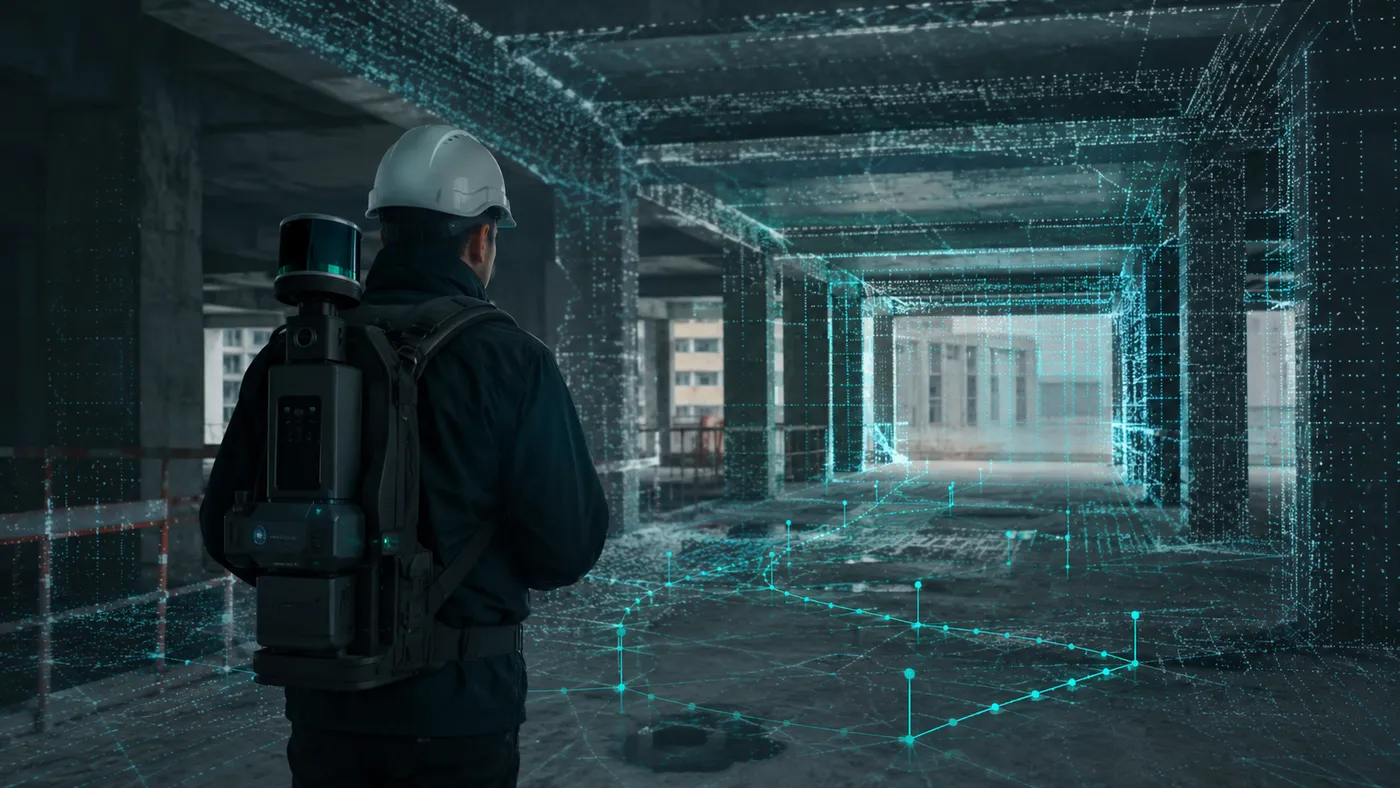
Handheld 3D scanners use LiDAR with simultaneous localisation and mapping (SLAM) to scan while being carried through a site, removing the repeated stops of tripod-based scanners. For construction workflows, this mobility brings concrete advantages that improve the return on 3D scanning. This article presents seven reasons why handheld SLAM scanners deserve a place in the on-site workflow.
You scan as fast as you walk
Classical tripod scanners require a stop-start workflow: setup, scan, move, repeat. Handheld SLAM scanners allow continuous scanning while walking — an obvious time saving and a less tiring task for the operator.
More information in far less time
A handheld LiDAR workflow on a building complex is several times faster than static tripod scanning and needs only one operator. When the costs are compared, the handheld scanner usually comes out on top.
Photographs and point cloud at the same time
Some handheld LiDAR scanners have a built-in camera and capture colour imagery at the same time as the scan. The result is a colourised point cloud — LiDAR points fused with the colour image — without a separate photography step and without extra time.
Access to tight spaces
On a site you rarely find wide, simple spaces. The handheld scanner, with its small footprint, reaches places where traditional platforms cannot, and its long boom even reaches spots an operator could not squeeze into — making the capture more complete.
No aviation authority approval
Drones are excellent outdoors, but they can be hard to use safely indoors, and regulations change often. A handheld scanner covers the places drones cannot reach, with no need for aviation approvals.
People in the way? No problem
Sites are active, and people move from one area to another. The handheld scanner can work around them and capture the full scene, without needing to clear or shut down an area — avoiding delays and overtime.
Anyone can scan with minimal training
Scanning with a handheld device has a low learning curve: switch the scanner on, walk it through the site and stop the scan at the end of the route. The attached display gives real-time feedback, so the task can be distributed across available workers rather than reserved for a single expert.
Conclusion
Handheld SLAM 3D scanners bring speed, flexibility and access in construction, complementing static scanners and drones. For a mobile 3D scan of a site or a building, contact us.