Structural assessment with thermal cameras: detecting problems in buildings
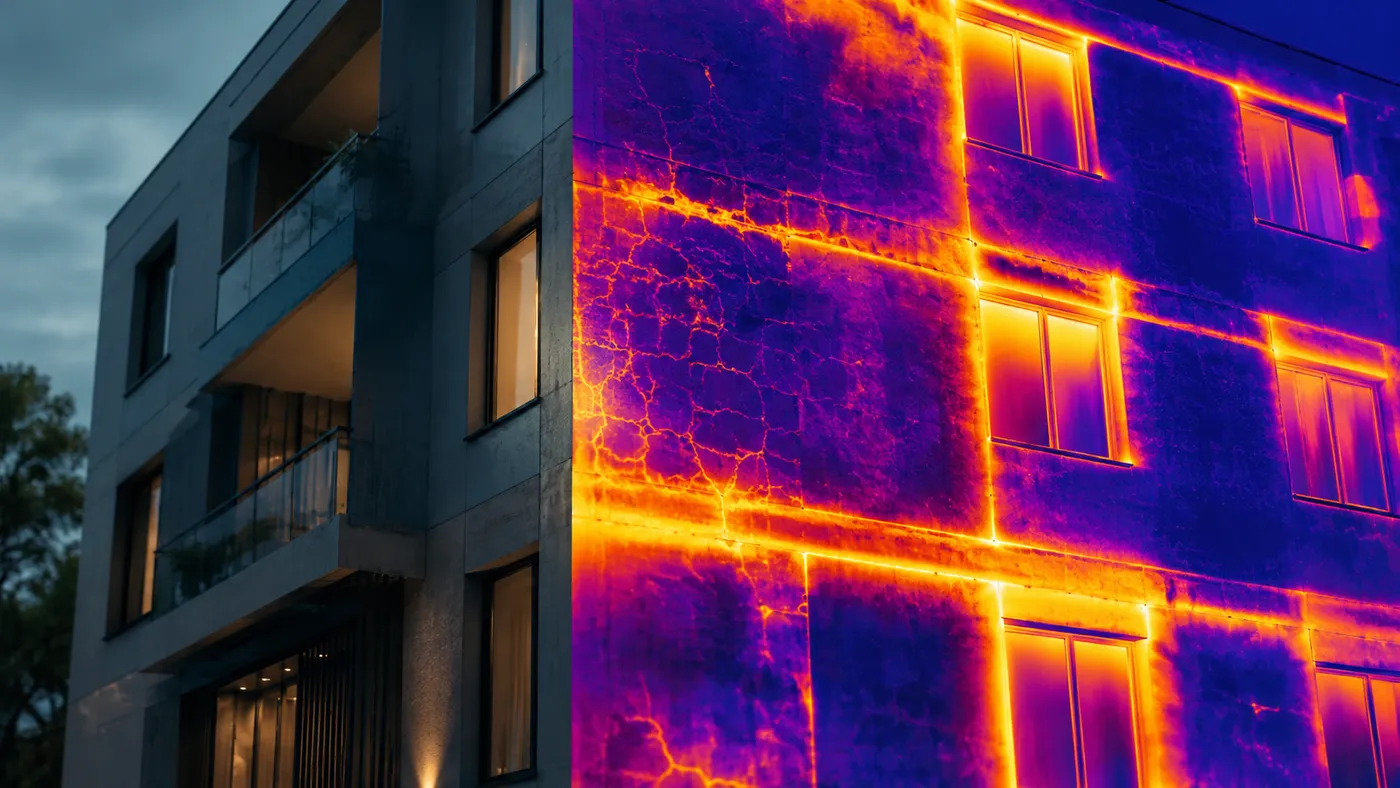
Many of a building’s problems — heat loss, water infiltration, insulation defects — remain hidden behind the finishes. A thermal camera brings them to light without invasive intervention, giving engineers and inspectors a detailed picture of structural integrity. This article presents how thermography is used in the structural assessment of buildings and the types of issues it detects.
Hot spots and water infiltration
Hot spots can indicate heat loss or poor insulation, and a thermal camera identifies them immediately, helping to optimise energy efficiency. Thermography also reveals water infiltration and moisture — problems which, if left untreated, degrade the structure over time.
Monitoring thermal insulation
Thermal assessment of insulation is essential for energy efficiency. Thermography precisely visualises areas with poor insulation, indicating where improvements are needed to reduce heat loss.
Inspection of concrete structures
A thermal camera highlights concrete defects — cracks, voids, infiltration — allowing preventive intervention and preserving structural integrity.
Assessing electrical installations
Thermography detects loose or faulty connections in electrical installations, preventing fire risk and ensuring systems work properly.
Checking waterproofing
For buildings with basements, a thermal camera detects leaks and water infiltration early on, preventing damage to the structure and the formation of mould.
Roof inspection
Roofs, exposed to extreme weather, can be checked thermographically for insulation loss, material deterioration or infiltration, contributing to their durability.
Checking metal structures
Thermography, including from a drone, highlights areas with possible defects or corrosion on metal structures, making it easier to assess the need for repairs.
Conclusion
Thermography brings a step change in the structural assessment of buildings: early detection of problems, reduced maintenance costs and optimised energy performance — and from a drone, inspection becomes accessible even at height. For a thermographic assessment of a building, contact us.