How 3D scanning works: laser scanning and photogrammetry
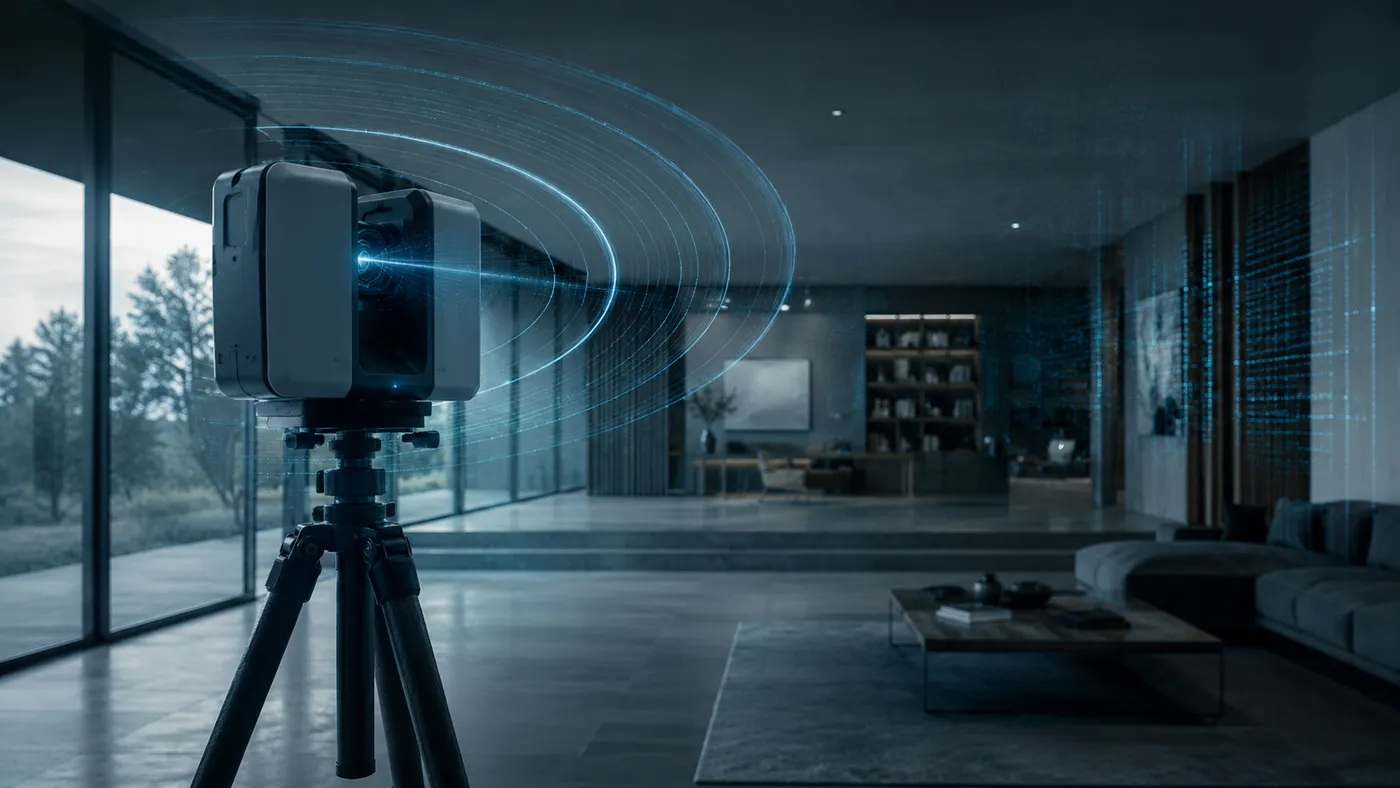
3D scanning is the process by which a real-world object or building is analysed in order to recreate its shape and appearance in digital form, as a 3D model. The result — a point cloud — becomes the basis for design, CAD modelling or even 3D printing. There are several 3D scanning methods, the main ones being 3D laser scanning and photogrammetry, and the choice depends on the project. This article briefly explains how each of them works.
3D laser scanning
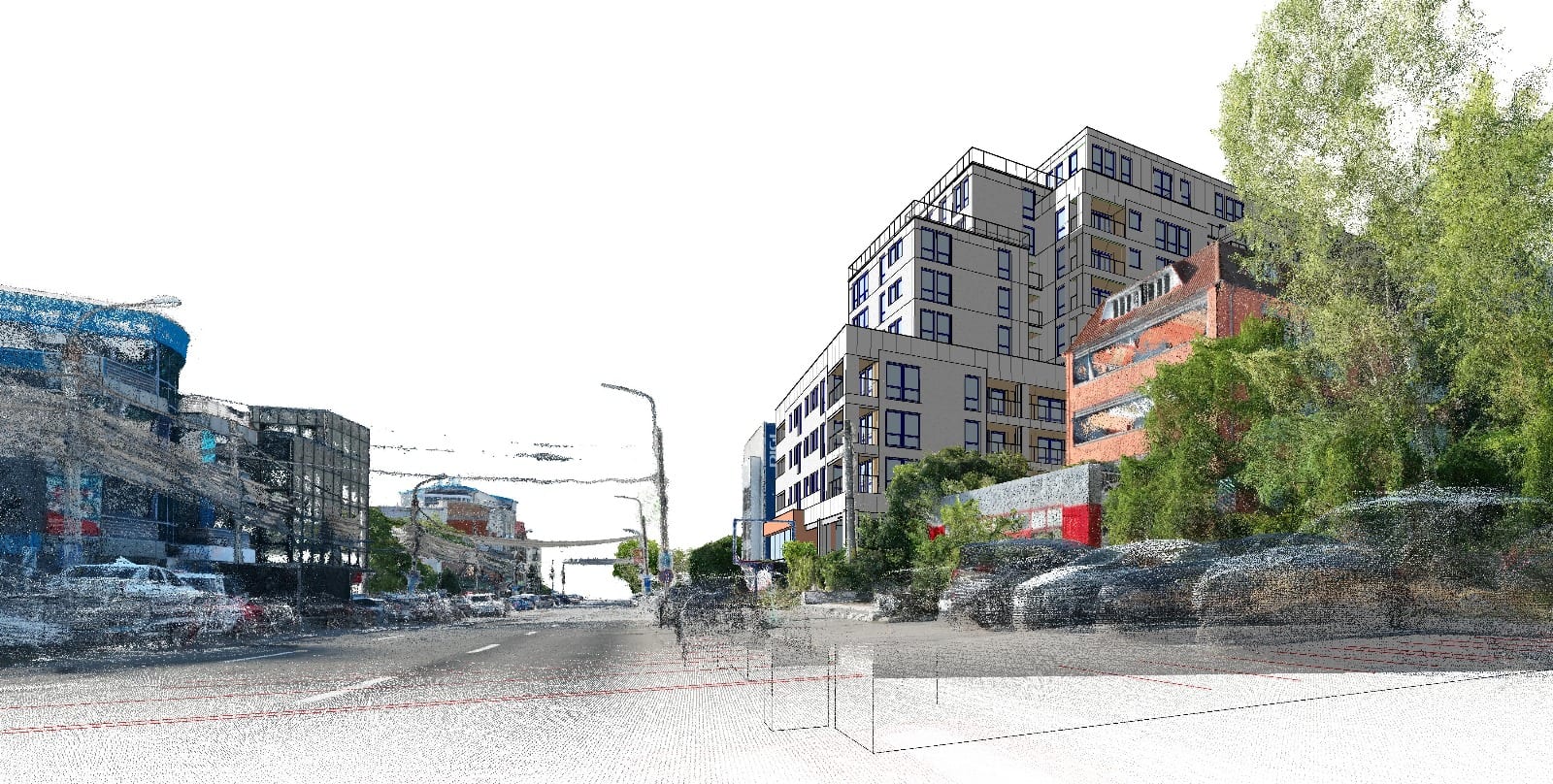
3D laser scanning captures the shape of an object digitally using laser light. The scanner works like a camera: it projects a laser line onto the object, and a sensor measures the distance to the surface, capturing only what lies within its line of sight. In this way very fine details and complex geometries are measured — details that are impossible or impractical to measure with traditional methods — generating extremely accurate point clouds. Through processing with specialised algorithms, the data becomes a point cloud and then a CAD model.
Photogrammetry (photos from a drone or camera)
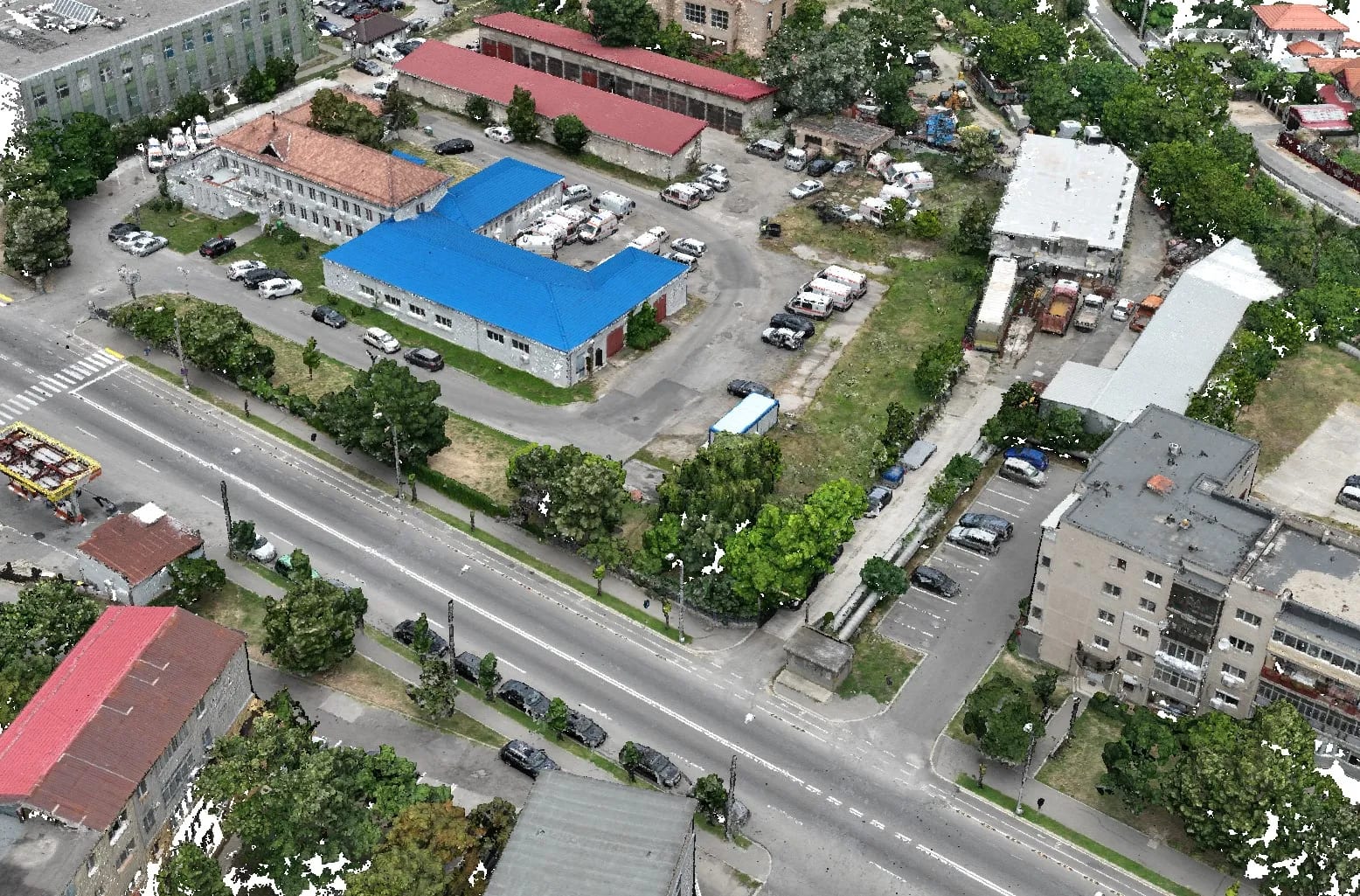
Photogrammetry is the science that produces measurements from several photographs of an object, taken from different angles. The method imitates the stereoscopy of human vision, turning the shape, volume and depth of complex physical objects into 2D and 3D. It is not as accurate as laser scanning, but with good photogrammetry software it delivers very good results, especially over large surfaces or where texture and colour matter.
Conclusion
3D laser scanning and photogrammetry are complementary methods: the first offers the greatest accuracy in details, the second efficiently covers large, textured areas. The optimal choice depends on the objective of each project. For a 3D scan of a building, a piece of land or an object, contact us — we will recommend the right method.