Thermal-imaging drones for photovoltaic parks: detecting defects
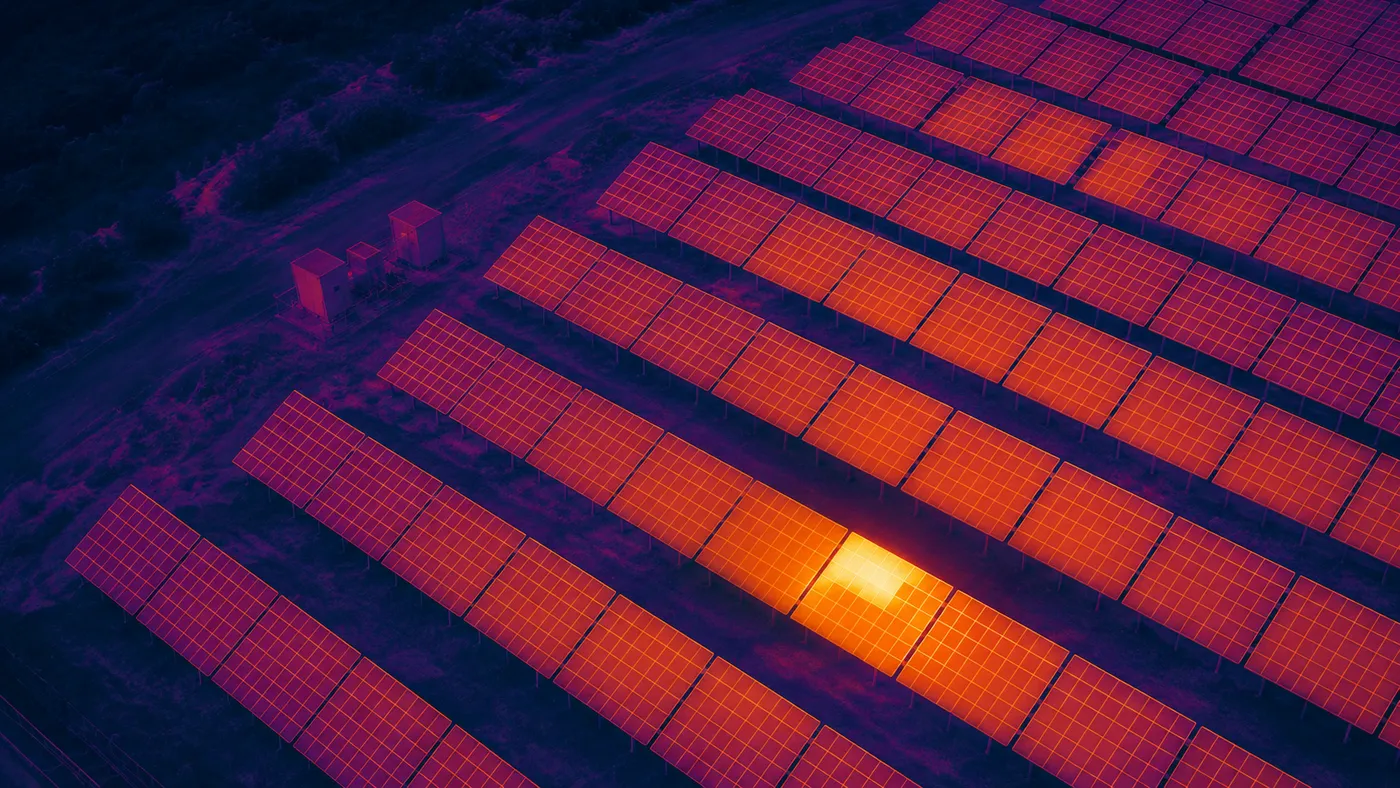
A photovoltaic park produces its full energy output only when every panel works correctly — and defects that are invisible to the naked eye can significantly reduce performance. Inspection with drones equipped with a thermal camera is today the fastest way to locate these issues: temperature variations of faulty cells appear immediately on the thermal image. This article presents the types of defects found in PV parks and the concrete advantages of inspection with thermal-imaging drones.
Types of defects in photovoltaic parks
Before looking at the benefits of thermography, it helps to know the main defects:
- Cell defects: damage or contamination that reduces energy production.
- Cracks and delamination: structural defects that lower panel efficiency.
- Shading: objects or structures that partly block sunlight.
- Reverse polarity and string faults: electrical issues that degrade system performance.
- Diode defects: critical components whose failure disrupts the electrical flow.
- Underperformance: general loss of efficiency due to material degradation or wear.
- Vegetation and dirt: deposits that block light and reduce yield.
- Tracker faults: faulty solar-tracking systems reduce light capture.
- Internal short circuits: hard to detect, they can cause serious damage.
Advantages of inspection with thermal-imaging drones
- Accurate defect detection: thermography reveals the hot spots associated with cracks or short circuits, quickly pinpointing the affected panels.
- Time and cost savings: the drone covers large areas in a short time, replacing slow and expensive manual inspection.
- Preventive monitoring: periodic inspections catch defects at an early stage, reducing maintenance costs.
- Improved safety: it eliminates the risks of manual inspection at height.
- Clear data for decisions: precise thermal images make interpretation and repair planning easier.
- Reduced downtime: fast defect identification shortens interventions.
- Maximum yield: fixing defects keeps energy production at optimum capacity.
Conclusion
Inspection with thermal-imaging drones is an advanced and efficient way to keep a photovoltaic park running at peak performance, through early defect detection and preventive intervention. If you operate a PV installation, contact us for a drone thermographic inspection — we will quickly identify the panels with problems.